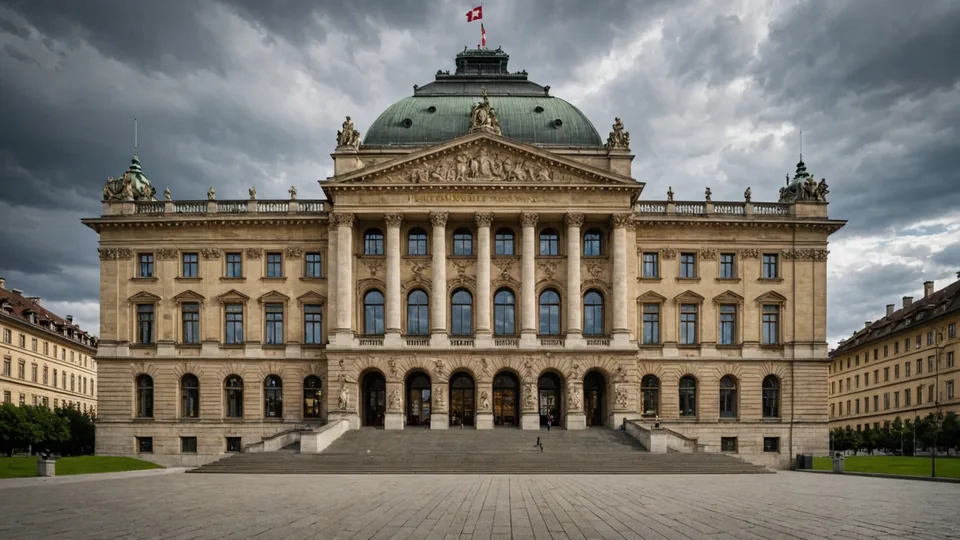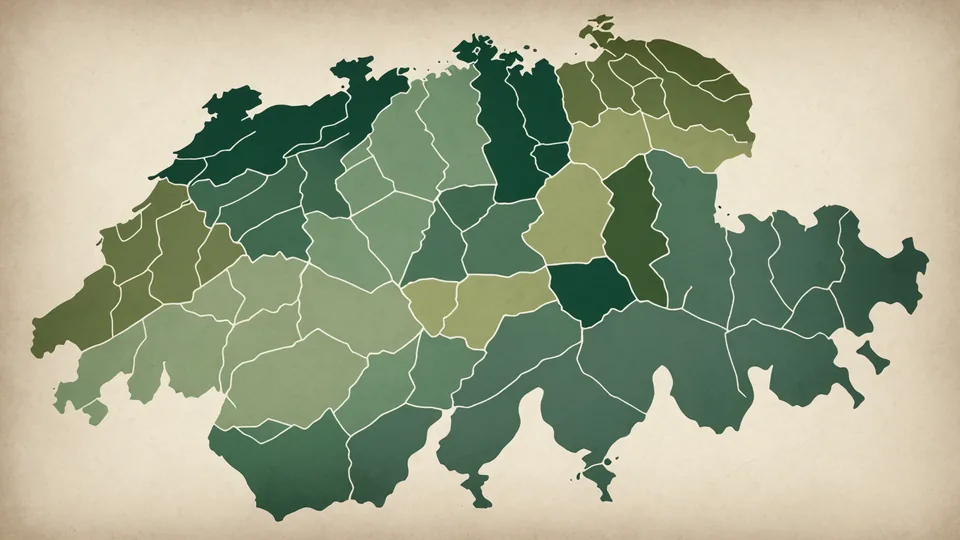
The Swiss legal system has one Federal Tribunal (Bundesgericht, BGer) at the apex and 26 cantonal court systems below it. A practitioner who limits their research to BGer decisions is not doing complete research. They are doing only half of it, and possibly the less operationally relevant half for a client whose dispute will be decided by a cantonal court, not the Federal Tribunal.
This piece explains the relationship between Federal Tribunal precedent and cantonal court decisions, and why that relationship matters more to day-to-day legal research than most generic legal research advice acknowledges.
What the BGer Actually Binds
The Federal Tribunal is the supreme judicial authority in Switzerland under Art. 188 BV. Its decisions on federal law are binding in the sense that cantonal courts must follow Federal Tribunal interpretation of federal statutory provisions. If the BGer has held that Art. 97 OR (breach of contract) requires a specific causal standard, a Zurich cantonal court cannot apply a different standard for breach of contract under the same provision.
But this binding effect has a specific scope: it covers federal law interpretation. Where a question turns on cantonal law, cantonal cantonal implementing ordinances, or an area where federal law is silent and cantonal law operates, Federal Tribunal decisions are not directly binding as precedent. The cantonal court is applying its own canton's law, and the Federal Tribunal's review of cantonal law is limited to whether the cantonal decision violates federal law, constitutional rights, or international treaty obligations.
The practical implication is that two cases with nearly identical facts in different cantons may be decided differently, both correctly, because the underlying cantonal legal provisions differ. A practitioner advising a client on risk in Canton Zurich cannot rely solely on a favorable BGer decision if that decision interpreted a question of cantonal law in a different canton.
The Role of the BGE in Cantonal Court Practice
BGE (Bundesgerichtsentscheid) decisions are the published decisions of the Federal Tribunal. They are divided into collections by subject matter: BGE I (public law), BGE II (private law, ZGB), BGE III (private law, OR/commercial), BGE IV (criminal), BGE V (social insurance). A decision published in BGE III affects contract law questions directly.
Cantonal courts cite BGE decisions extensively for several reasons beyond binding precedent. First, they are readily accessible and authoritative on federal law questions. Second, a cantonal court that departs from established BGE interpretation faces a high probability of reversal on appeal to the Federal Tribunal. Third, the Federal Tribunal's articulation of legal principles in BGE decisions is often more systematic than what appears in cantonal court reasoning.
But cantonal courts also develop their own doctrine on questions that do not regularly reach the Federal Tribunal. Questions of procedural detail, local commercial custom, cantonal tax law, and cantonal public law all generate cantonal court doctrine that is not reflected in BGE. A practitioner who searches only BGE for these questions will find nothing, and may incorrectly conclude that there is no precedent, when in fact the cantonal supreme court has addressed the question repeatedly.
The Interpretive Space on Cantonal Statutory Gaps
Federal law does not cover every legal question. Art. 3 BV reserves residual sovereignty to the cantons, and cantonal legislation creates substantial bodies of law in areas such as administrative law, cantonal tax, construction and planning, and certain social services. When a question arises in one of these areas, the controlling precedent is cantonal, not federal.
Even within areas of federal legislation, gaps exist where cantonal courts have interpretive authority. The Federal Tribunal has held that it reviews cantonal application of cantonal law only for arbitrariness under Art. 9 BV (Willkurverbot), not for correctness. This means a cantonal court's interpretation of its own cantonal statute can differ from what another canton's court would say about a similarly worded provision, and the Federal Tribunal will not correct the difference unless one of them is arbitrary.
We are not saying that BGE decisions are irrelevant to cantonal law questions. Federal constitutional principles (good faith, proportionality, prohibition of arbitrariness) apply across all cantonal law, and BGE decisions interpreting those constitutional principles are binding. But the specific statutory content of a cantonal provision is the cantonal court's domain.
Why This Creates Research Risk
A practitioner advising a growing manufacturing firm in St. Gallen on a commercial lease dispute needs to know: (a) the OR provisions on commercial tenancy, (b) the BGer decisions interpreting those provisions, and (c) whether Canton St. Gallen's courts have developed any doctrine on specific questions in commercial tenancy that differs from what a purely OR-plus-BGE analysis would suggest.
Step (c) is frequently skipped, not because practitioners think it is irrelevant, but because accessing cantonal court decisions efficiently is genuinely difficult. The Federal Tribunal publishes its decisions comprehensively. Cantonal courts publish selectively. Some cantons maintain reasonably complete online databases of appellate court decisions; others publish only a fraction. The research challenge is not conceptual; it is infrastructural.
When the cantonal court's doctrine on a question is accessible and relevant, failing to check it represents a research gap. When the client later faces an argument from the other side based on a cantonal appellate decision that the practitioner missed, the gap becomes a problem.
What Practitioners Actually Do
In practice, experienced Swiss practitioners compensate for the cantonal research gap through several routes: professional networks in relevant cantons, subscriptions to cantonal legal journals, and direct familiarity with the major cantonal appellate courts in their practice area. These are effective but not systematic. They depend on personal networks and do not scale to questions in unfamiliar cantons.
The systematic solution requires aggregating cantonal court decisions in a form that is searchable by legal question, not just by court or date. That aggregation problem is technically tractable but has not been solved comprehensively in existing Swiss legal research tools. Most tools focus on federal law because that is where the data is clean and complete. Cantonal court decisions require per-canton data collection from sources with very different publication formats and completeness levels.
This is precisely the research gap we built Silex Legal to address: a practitioner who asks a question about a commercial tenancy dispute in Canton St. Gallen should receive not just the OR provisions and the BGer decisions, but the cantonal appellate court decisions that show how that canton applies those federal provisions. Whether there is a meaningful cantonal layer on any given question is itself information that needs to surface, not be assumed absent.
Framing the Limitation Honestly
Cantonal court decision databases in Switzerland are incomplete by design: not all cantons publish all decisions, and publication norms vary by chamber, subject matter, and year. A search that returns no cantonal decisions does not establish that there are no relevant cantonal decisions. It establishes that no relevant cantonal decisions exist in the database searched.
Any research approach that handles cantonal precedent should be explicit about this limitation. A system that says "no relevant cantonal decisions found" is being more honest than one that silently presents federal sources as if cantonal sources had been equally searched. The practitioner can then decide whether the gap in cantonal coverage is material to their specific question, or whether the federal-only picture is sufficient for what they need.