Swiss federal law is uniform: the OR applies in every canton, the ZGB applies in every canton, and the Federal Tribunal provides authoritative interpretation of both. If this were the complete picture, a practitioner researching a contract law question in Bern would reach exactly the same answer as a practitioner researching the same question in Geneva. In practice, this is not always true, and the reasons why it is not true matter considerably for how legal research should be conducted.
This piece addresses how and why cantonal courts sometimes diverge on federal law questions, what drives that divergence, and what the practitioner implications are. We are writing from the perspective of Silex Legal's work building a cross-cantonal legal research tool, which means we have spent time looking at this problem from a data perspective as well as a doctrinal one.
The Mechanism of Divergence
The Federal Tribunal does not have jurisdiction over every federal law question in every cantonal dispute. Under the BGG (Bundesgerichtsgesetz, SR 173.110), appeals to the Federal Tribunal in civil matters require a minimum dispute value (Streitwert) of CHF 30,000, with some exceptions. Disputes below this threshold are decided by cantonal appellate courts without direct Federal Tribunal review.
This means there is a substantial class of federal law questions that cantonal courts decide with no formal mechanism for Federal Tribunal correction. A cantonal appellate court may interpret an OR provision differently from how another cantonal appellate court interprets it, and neither decision will reach the Federal Tribunal unless the dispute value is sufficient or a constitutional issue is present.
Even for questions above the Streitwert threshold, not every case is appealed to the Federal Tribunal. A client may settle, may lack resources for a Federal Tribunal appeal, or may accept a cantonal outcome even if incorrect. The result is that cantonal court doctrine on specific OR provisions can diverge from Federal Tribunal doctrine and even from other cantonal courts' doctrine, and that divergence may persist for years before a case reaching the Federal Tribunal corrects it.
What Divergence Looks Like in Practice
Divergence is rarely dramatic: two cantons are not applying completely different rules to breach of contract. The divergence tends to be at the level of application standards, procedural expectations, and the inferences courts draw from evidentiary facts.
Consider how different cantonal appellate courts might approach the question of when a commercial contract's acceptance notice is effective under Art. 10 OR. The provision governs when a contract is formed by acceptance, and specifically when acceptance becomes effective for absent parties. The Federal Tribunal has addressed this in BGE decisions. But the specific application to electronic communications, modern delivery services, and commercial practice has evolved, and different cantonal courts may apply the standard with different emphasis on the commercial context of the parties.
A practitioner advising on contract risk in a specific canton benefits from knowing not just what the Federal Tribunal has said about Art. 10 OR, but how the canton's appellate court has applied it in recent decisions. If the cantonal court consistently applies a more exacting standard than the BGE decisions suggest, that is material to a risk assessment, even if the cantonal court's approach would not survive a Federal Tribunal appeal.
The Institutional Reasons for Divergence
Several structural factors drive cantonal court divergence on federal law. First, cantonal courts have their own traditions of legal reasoning and emphasis. German-speaking cantonal courts tend toward systematic doctrinal analysis; French-speaking cantonal courts in Romandy sometimes apply a more pragmatic, result-oriented approach influenced by French civil law tradition. Both are applying the same federal statutes, but their analytical frameworks differ.
Second, cantonal courts operate within their own cantonal procedural traditions even after the ZPO federalized civil procedure in 2011. The ZPO left cantonal courts to organize their own internal workings, their judicial assignments, and certain procedural details. These differences in court culture affect how cases are argued and how courts reason.
Third, some federal law provisions are deliberately open-textured: they provide principles rather than rules, and courts must fill in the specifics case by case. Provisions like Art. 2 ZGB (good faith) and Art. 4 ZGB (judicial discretion) explicitly invite judicial discretion. Where judicial discretion is invited, variation is expected. We are not saying this variation represents error; it represents the legitimate operation of a legal system that allocates some norm-creation to courts.
How to Factor Cantonal Divergence Into Research
A practitioner who has identified the controlling federal provision and the relevant BGE decisions is not finished with research for a matter in a specific canton. Two additional steps are warranted:
First: search the cantonal appellate court decisions (Obergericht / Cour d'appel / Tribunale d'appello) for decisions on the same provision. If the cantonal court has addressed the question recently, that decision is what the trial court you are appearing before will look to for guidance, not the Federal Tribunal decision.
Second: identify whether the cantonal court's approach diverges from the BGE position. If it does, and if the dispute value and circumstances could support a Federal Tribunal appeal, that divergence is itself a litigation factor. A client facing an adverse cantonal court interpretation of a federal statute has an appeal path that a client facing a correctly applied federal provision does not.
The practical difficulty with step one is that cantonal appellate court decisions are not uniformly accessible. Some cantons publish decision databases that are reasonably complete for recent years. Others publish selectively or maintain archives with poor search functionality. The research burden of checking cantonal precedent is real, even for practitioners who know it is necessary.
The Limits of the BGE as a Proxy
There is a temptation to treat BGE decisions as a complete proxy for "what Swiss courts do with this provision." It is not a complete proxy. BGE decisions represent the Federal Tribunal's view on the questions that actually reached it, through the filter of disputes with sufficient value and the parties' decisions to appeal. They do not represent the distribution of cantonal court approaches across the full range of disputes involving the same provisions.
A BGE decision that establishes a clear rule for a particular application does not mean that cantonal courts consistently apply that rule correctly below the appeal threshold. Research that stops at BGE for a canton-specific advisory is incomplete. Research that extends to cantonal appellate court decisions for the specific canton is more complete, and research that can identify whether the cantonal court's approach is consistent with or divergent from the Federal Tribunal's is the most useful for advising clients on actual litigation risk.
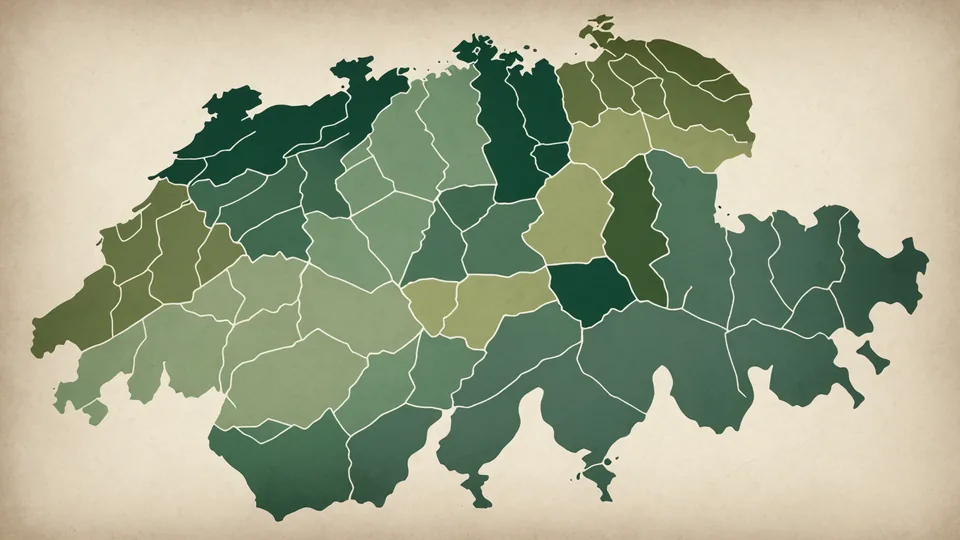
This is the research need that Silex Legal's canton-by-canton coverage is designed to address. The specific coverage we have built up for each canton's appellate court decisions is not uniform across all 26 cantons, and we are transparent about that. But where cantonal coverage exists, the divergence question becomes answerable from a single query rather than from a parallel search across separate cantonal databases.